This review hbada e3 pro looks at a mesh office chair built around adjustable support for the lower back, neck, and arms, plus a recline that reaches 140 degrees.
Its many adjustment points may suit people who shift posture through the day, provided the fit and desk space work for them.
Hbada E3 Pro Review Summary
The quick verdict
1,000+ ratings
Read Amazon ReviewsHbada E3 Pro
A feature-rich mesh chair for desk workers seeking adjustable lumbar, neck, arm, and recline support across varied sitting positions.
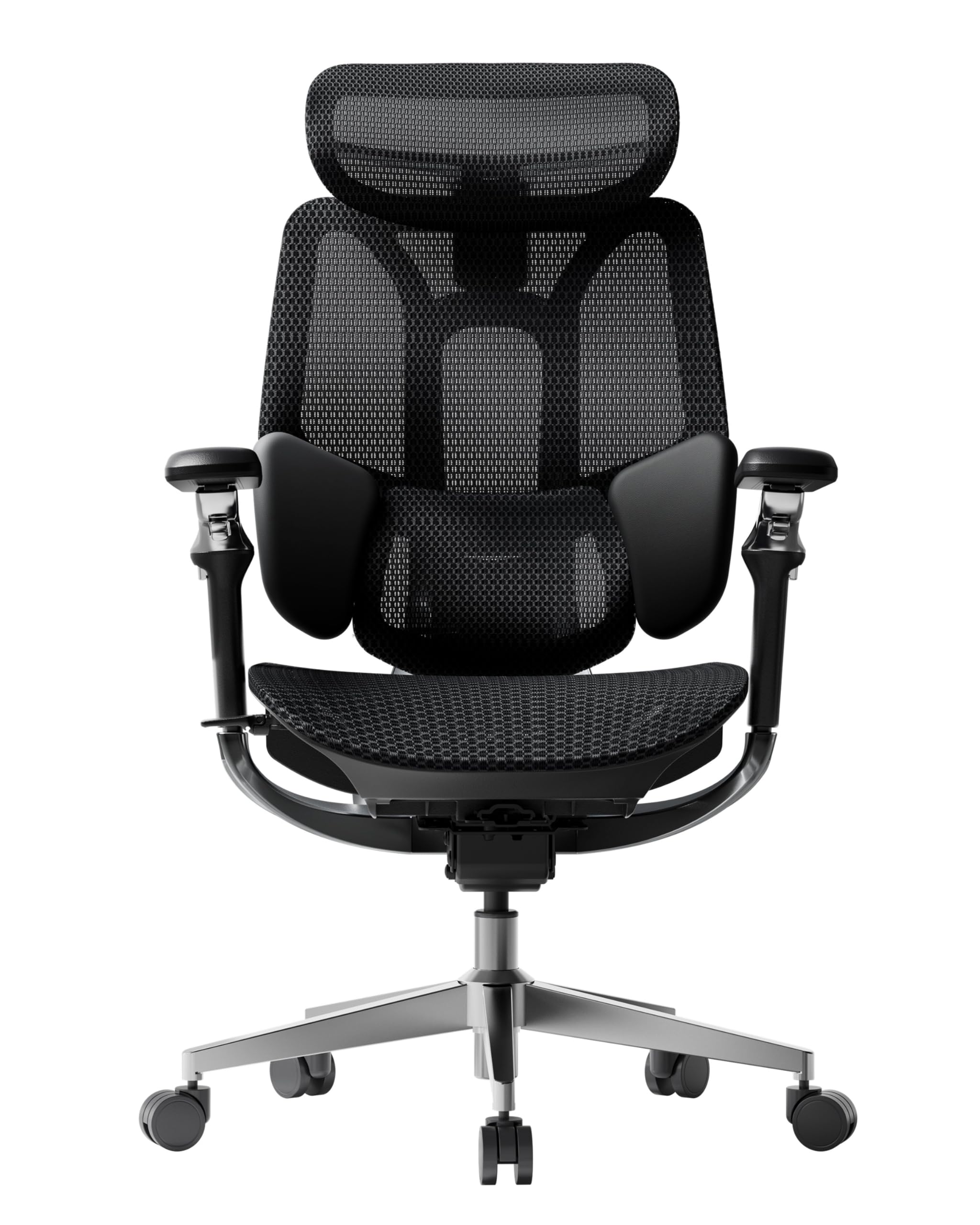
- Three-zone floating lumbar support uses pivoting side wings, described with a 40-to-80-degree range, and adjusts vertically by 60 mm.
- The dual-axis headrest adjusts 70 mm in depth, 40 mm in height, and rotates up to 70 degrees.
- The recline offers suggested positions at 105, 115, 130, and up to 140 degrees; tilt tension is described as adapting to body weight.
- The mesh back and seat use high-elasticity mesh intended to allow airflow and flexible support.

Pros
- The lumbar support can move vertically and pivot at the sides, offering more targeted positioning than a fixed support point.
- Headrest adjustments cover height, depth, and rotation, useful for users who want to tune neck contact for upright work and reclining.
Consider before buying
- The number of adjustment mechanisms may take time to set up; buyers who prefer a simple, minimal-adjustment chair may find the design more involved.
- A 140-degree recline and multiple moving armrest positions need adequate clearance, so check the available space around the desk before choosing.
Read the full review summary
The Hbada E3 Pro’s core idea is to keep support responsive as you move.
Its three-zone lumbar system pivots at the sides and adjusts vertically, while the headrest, backrest, seat depth, and armrests all offer ways to tune contact points.
Weight-sensing recline tension and breathable mesh round out a design aimed at both focused desk work and leaned-back breaks.
The chair is specified for users from 5 feet 1 inch to 6 feet 5 inches, with 80 mm of backrest adjustment, 60 mm of lumbar adjustment, and 50 mm of seat-depth adjustment.
Those ranges suggest broad fit flexibility, but a stated height range cannot guarantee an individual fit; users should check that the seat, desk, and arm positions suit their proportions and workspace.
The buying factors
Hbada E3 Pro Scorecard
Editorial scores reflect listed features and buyer fit; they are not laboratory measurements or customer ratings.
Lumbar adjustability
Three-zone support with pivoting side wings and 60 mm of vertical movement offers multiple ways to position contact at the lower back.
Neck support adjustment
The dual-axis headrest adjusts in depth, height, and rotation, giving users several ways to line it up with their neck.
Arm positioning
The armrests combine dual 360-degree rotation with folding, allowing a wide range of elbow positions.
Recline flexibility
Four suggested working and resting angles extend to 140 degrees, with tilt tension described as responding to body weight.
Fit customization
Backrest height, lumbar position, and seat depth are adjustable, with a broad recommended user-height range.
Materials and support
The mesh design prioritizes airflow, and the chair lists a 300-pound maximum weight recommendation along with SGS-certified gas cylinder and BIFMA compliance.
Key Features and Specifications of Hbada E3 Pro
- Three-zone floating lumbar support uses pivoting side wings, described with a 40-to-80-degree range, and adjusts vertically by 60 mm.
- The dual-axis headrest adjusts 70 mm in depth, 40 mm in height, and rotates up to 70 degrees.
- The recline offers suggested positions at 105, 115, 130, and up to 140 degrees; tilt tension is described as adapting to body weight.
- The mesh back and seat use high-elasticity mesh intended to allow airflow and flexible support.
- The armrests feature dual 360-degree rotation and fold by 39 degrees.
- Fit adjustments include 80 mm of backrest movement, 60 mm of lumbar movement, and 50 mm of seat-depth adjustment; the recommended user-height range is 5 feet 1 inch to 6 feet 5 inches.
- The chair has a 300-pound maximum weight recommendation and lists an SGS-certified Class 4 gas cylinder and BIFMA compliance.
Pros and Cons of Hbada E3 Pro
Pros
- The lumbar support can move vertically and pivot at the sides, offering more targeted positioning than a fixed support point.
- Headrest adjustments cover height, depth, and rotation, useful for users who want to tune neck contact for upright work and reclining.
- Seat depth and backrest height adjustments give users additional ways to match the chair to their body.
- The recline range and weight-responsive tilt design support changing posture between work and rest.
- Mesh across the chair’s support surfaces is intended to help air circulate.
Consider before buying
- The number of adjustment mechanisms may take time to set up; buyers who prefer a simple, minimal-adjustment chair may find the design more involved.
- A 140-degree recline and multiple moving armrest positions need adequate clearance, so check the available space around the desk before choosing.
- The broad recommended height range is only a starting point; seat height, desk height, and arm placement still need to work together for your body.
Who Should Buy Hbada E3 Pro?
Good fit
Consider the Hbada E3 Pro if you spend long stretches at a desk and want a chair whose lower-back support, headrest, seat depth, and arm position can each be adjusted.
Its approach is particularly relevant if you alternate between upright typing, leaning forward, and reclining rather than sitting in one position throughout the day.
It may also suit shared workspaces or multi-user home offices where different people need to reposition the backrest and lumbar support.
Before deciding, measure the space around your desk and compare the chair’s adjustment range with your own seated posture and desk height.
Who should skip it
Skip this chair if you want a straightforward seat with few settings to manage, or if you have already found that multi-adjustment chairs take too much time to fit to your preferences.
Look elsewhere if the recommended user-height range or 300-pound maximum weight recommendation does not fit your needs, or if you require a specific seat measurement that is not established here. Check dimensions and fit requirements before purchasing.
What the Hbada E3 Pro’s adjustment range means for daily use
Lumbar support that can be positioned
The three-zone support combines vertical movement with pivoting side wings, so a user can adjust where the support meets the lower back and how the wings sit around it.
That flexibility may help when switching between upright work and a reclined posture, though the most comfortable position will depend on individual back shape and preferred pressure.
Headrest and armrests for posture changes
The headrest’s height, depth, and rotation adjustments give users several ways to align it as they sit upright or lean back.
The rotating and folding armrests add options for elbow support and clearance; take time to check that they sit comfortably at your desk rather than forcing your shoulders upward or outward.
Recline for work and breaks
The chair provides four suggested recline angles, ending at 140 degrees, and describes tilt tension that responds to body weight. This makes the recline range relevant for buyers who like to change posture during the day.
If you expect to work close to a desk while reclined, consider whether your screen and work surface remain comfortably reachable.
Fit, mesh, and rated capacity
The combination of seat-depth, backrest, and lumbar adjustments gives users multiple fit variables to try, while mesh is intended to encourage airflow.
The recommended height span and maximum weight recommendation help define who the design targets, but neither replaces checking how the seat and armrests fit your own measurements.
Alternatives to Hbada E3 Pro
Home Office Desk Chairs alternative
17,000+ ratings
Read Amazon ReviewsSIHOO M57
Choose the Hbada if its greater stated recline and seat-depth adjustment appeal to you.
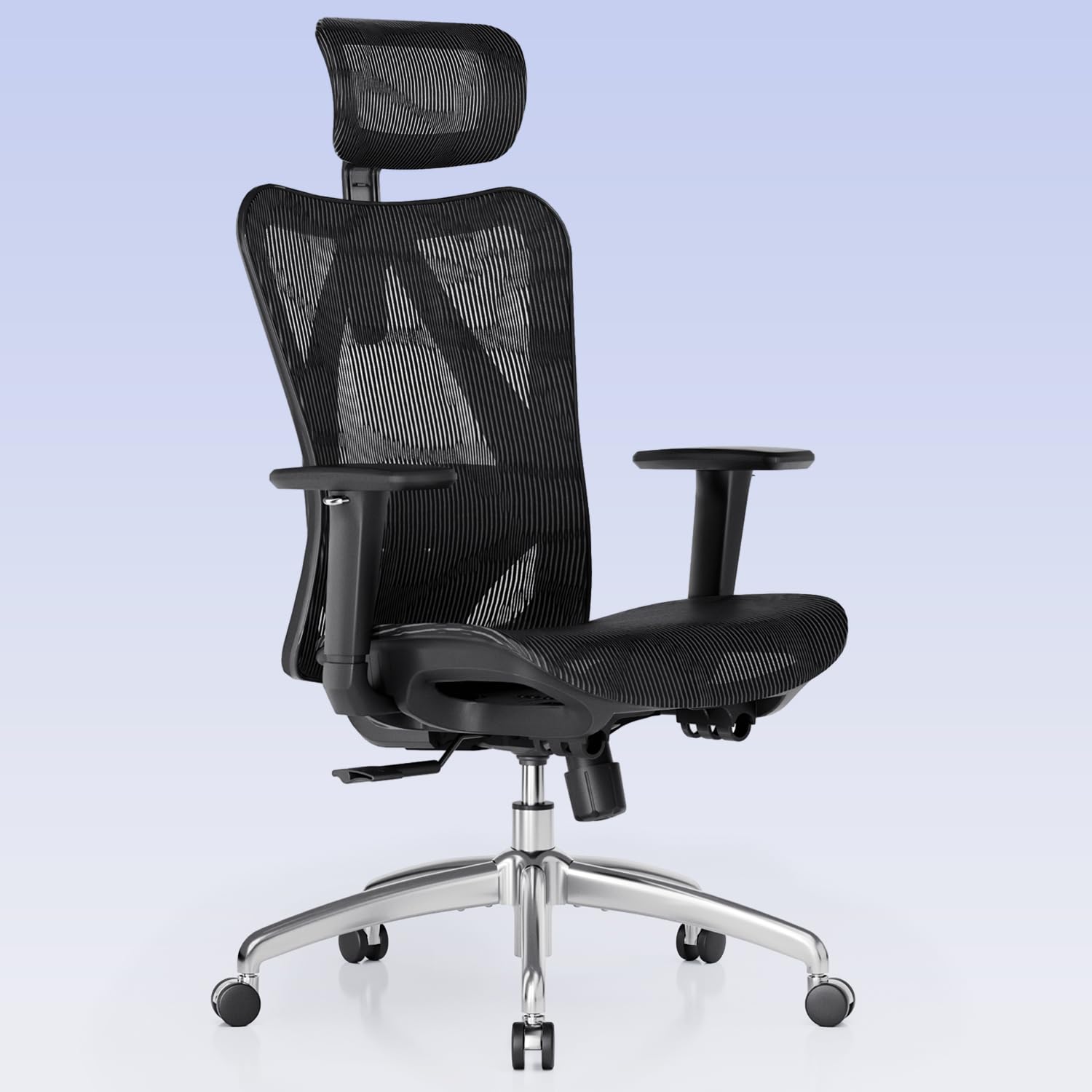
Consider the SIHOO M57 if you prefer a lower maximum recline angle and want its listed 330-pound capacity; compare the fit and support layout against your own priorities.
- The SIHOO M57 has height- and depth-adjustable lumbar support, a tilting and lifting headrest, 3D armrests, and a recline range from 90 to 126 degrees.
- It lists a 330-pound capacity.
- The Hbada E3 Pro offers a wider set of specified adjustments, including 50 mm of seat-depth movement, lumbar wings that pivot, and recline up to 140 degrees.
Home Office Desk Chairs alternative
17,000+ ratings
Read Amazon ReviewsSIHOO B300 PRO
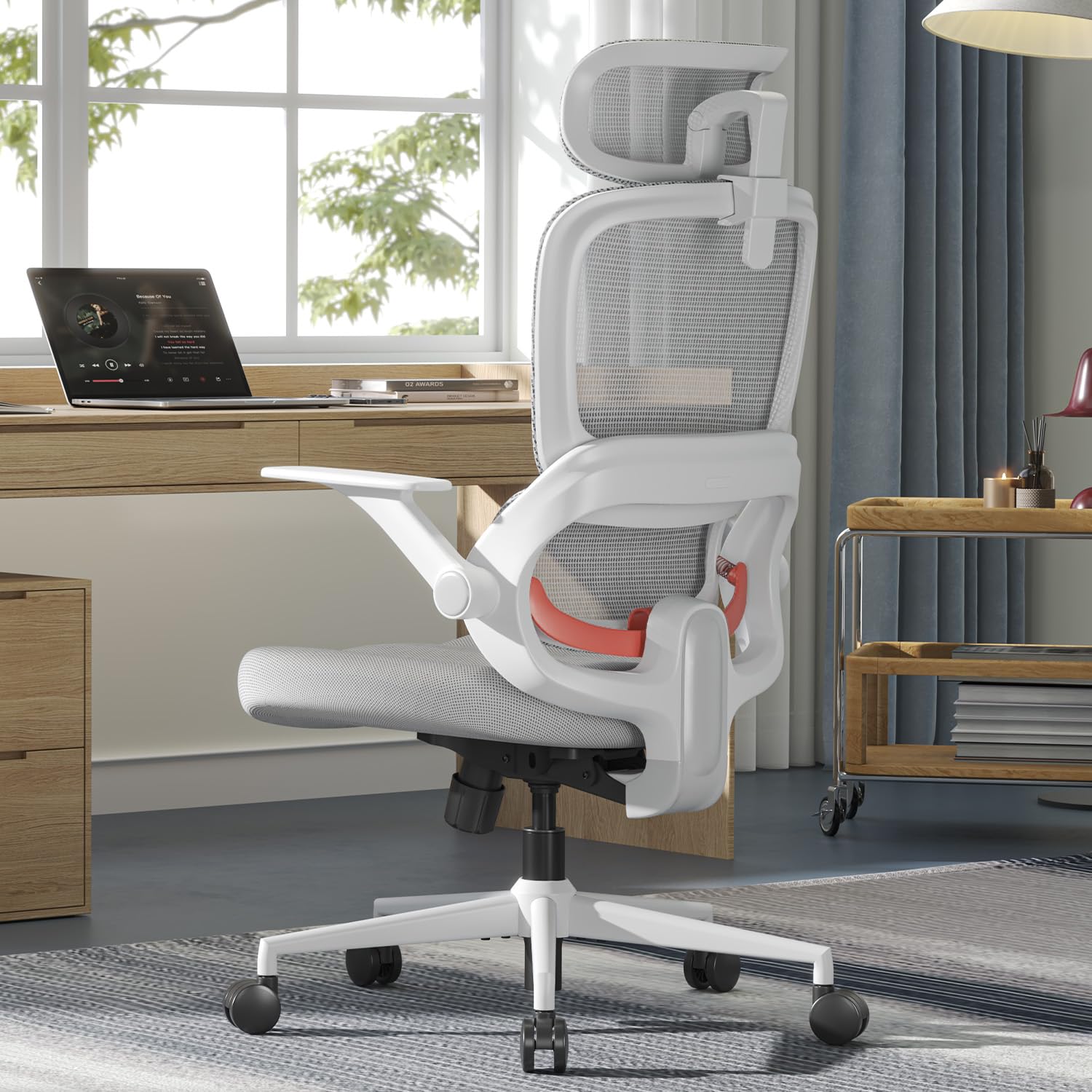
Consider the SIHOO B300 PRO if independent backrest adjustment and a more directionally adjustable lumbar system are priorities.
The Hbada offers a defined four-position recline range and detailed headrest adjustment figures, which may be useful if those are the settings you expect to use most.
- The SIHOO B300 PRO describes a spring-assisted four-way lumbar system, independently adjustable backrest height, adjustable seat depth, weight-sensing recline, and 6D armrests.
- The Hbada E3 Pro pairs a pivoting three-zone lumbar design with seat-depth adjustment and a headrest that can move in depth, height, and rotation.
Is Hbada E3 Pro Worth It?
The Hbada E3 Pro is worth considering if you want a highly adjustable mesh chair for a routine that includes frequent posture changes.
Its combination of moving lumbar wings, adjustable headrest, seat-depth control, rotating armrests, and recline up to 140 degrees gives buyers several ways to tune the fit.
The tradeoff is complexity: a chair with so many moving parts benefits from careful setup, and its stated size and capacity ranges should be checked against your body and workspace.
If those fit and the adjustment options match your habits, it presents a compelling feature set for a home office.
Your review at a glance
1,000+ ratings
Read Amazon ReviewsHbada E3 Pro
A feature-rich mesh chair for desk workers seeking adjustable lumbar, neck, arm, and recline support across varied sitting positions.
- Three-zone floating lumbar support uses pivoting side wings, described with a 40-to-80-degree range, and adjusts vertically by 60 mm.
- The dual-axis headrest adjusts 70 mm in depth, 40 mm in height, and rotates up to 70 degrees.
- The recline offers suggested positions at 105, 115, 130, and up to 140 degrees; tilt tension is described as adapting to body weight.
- The mesh back and seat use high-elasticity mesh intended to allow airflow and flexible support.