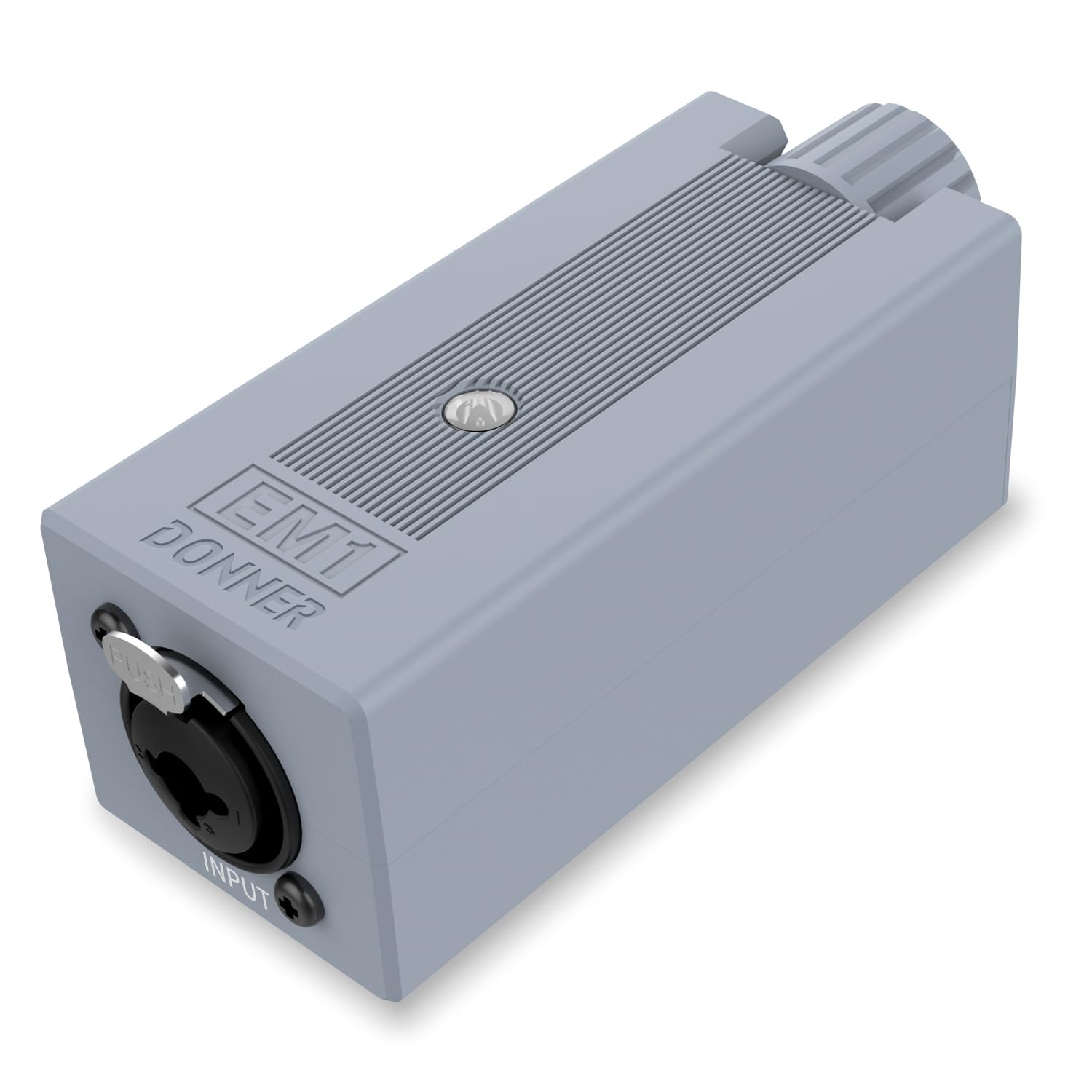
The Donner EM1 is a rechargeable personal in-ear monitor amplifier built for headphone monitoring from XLR or TRS sources.
This Donner EM1 review looks at its portable format, stereo/mono switching, and design tradeoffs for musicians who need a simple wired setup.
Donner EM1 Review Summary
The quick verdict
800+ ratings
Read Amazon ReviewsDonner EM1
A compact, rechargeable personal monitor amplifier for musicians who need wired headphone monitoring from XLR or TRS sources.
- XLR and TRS input connectors use a locking mechanism.
- A stereo/mono source switch lets the user select a mode based on the cable connection.
- A 3.5 mm output jack connects to compatible headphones or in-ear monitors.
- A rechargeable Li-ion battery provides up to 12 hours of use.

Pros
- Offers both XLR and TRS input options for connecting a suitable audio feed.
- Stereo/mono switching accommodates different source and cable arrangements.
Consider before buying
- It does not support a microphone, limiting it to headphone monitoring from an audio source.
- The 3.5 mm output and selected input cable must match the headphones and source setup you intend to use.
Read the full review summary
The EM1 combines a belt-pack form with XLR and TRS inputs, a 3.5 mm output, and a stereo/mono source switch.
Its stated battery life is up to 12 hours, making it a candidate for rehearsals, lessons, or other sessions where carrying a personal monitoring amp is more practical than relying on a fixed headphone setup.
Its appeal is focused: connect a compatible audio source, use headphones or in-ear monitors, and manage listening level on the unit.
It does not support microphones, so it is intended for receiving and amplifying an audio feed rather than serving as a mic preamp or a complete mixing solution.
Buyers should confirm that the source connection and monitoring arrangement match their needs.
The buying factors
Donner EM1 Scorecard
Editorial scores reflect listed features and buyer fit; they are not laboratory measurements or customer ratings.
Connection flexibility
XLR and TRS inputs accommodate two common source connection types, while the output is a 3.5 mm jack.
Portable design
The compact design and metallic belt-pack clip are suited to carrying the amp during a session.
Battery convenience
The rechargeable Li-ion battery is rated for up to 12 hours, with power and charging status indicators.
Monitoring focus
The EM1 is specifically designed as a personal in-ear monitor amp with a headphone output and stereo/mono switching.
Setup simplicity
A source switch and volume control keep the basic monitoring task straightforward, provided the incoming signal and cable are compatible.
Role versatility
The monitoring role is clear, but the unit does not support microphones and is not described as a broader mixer or recording interface.
Key Features and Specifications of Donner EM1
- XLR and TRS input connectors use a locking mechanism.
- A stereo/mono source switch lets the user select a mode based on the cable connection.
- A 3.5 mm output jack connects to compatible headphones or in-ear monitors.
- A rechargeable Li-ion battery provides up to 12 hours of use.
- Power and battery charging status are shown by LED indicators.
- A solid metallic belt-pack clip and compact design support portable use.
- The amplifier does not support microphones.
Pros and Cons of Donner EM1
Pros
- Offers both XLR and TRS input options for connecting a suitable audio feed.
- Stereo/mono switching accommodates different source and cable arrangements.
- Rechargeable operation and up to 12 hours of battery life support extended sessions away from a fixed setup.
- A belt-pack clip makes the compact unit convenient to carry while monitoring.
Consider before buying
- It does not support a microphone, limiting it to headphone monitoring from an audio source.
- The 3.5 mm output and selected input cable must match the headphones and source setup you intend to use.
- The description does not specify headphone impedance limits or detailed signal-routing behavior, so confirm compatibility if your setup has particular requirements.
Who Should Buy Donner EM1?
Good fit
Consider the EM1 if you need a portable personal monitor amp for headphones or in-ear monitors and your audio feed uses a compatible XLR or TRS connection.
Its clip-on form, source-mode switch, volume control, and rechargeable battery make it a practical feature set for musicians and other users who want individual wired monitoring.
It may also suit lessons, practice, and rehearsal situations where carrying a small amp is useful.
Before buying, check the output connector on your headphones and the cable path from your source, then confirm whether your feed should be set to stereo or mono.
Who should skip it
Skip this model if you need microphone support, a device to mix several sources, or a complete recording interface.
The described role is personal headphone monitoring, so it is not a substitute for equipment designed to handle those tasks.
Choose another setup if your headphones, source, or required signal routing do not fit the EM1's XLR/TRS inputs and 3.5 mm output. Check your connectors and monitoring arrangement before committing.
How the Donner EM1 Fits a Personal Monitoring Setup
Inputs and source matching
XLR and TRS input options give the EM1 a useful degree of connection flexibility for a personal monitor amp.
The locking mechanism can help keep a connected cable secured during use, but buyers should still verify the exact cable and signal path needed by their equipment.
Stereo and mono choices
The source switch is intended to support stereo or mono operation depending on the cable connection.
That makes it important to consider how the incoming feed is arranged: select the mode that fits the connection rather than assuming every source will behave identically.
Battery-powered portability
The rechargeable battery is specified for up to 12 hours, with LEDs for power and charging status.
That combination supports a portable routine, although actual session planning should account for charging access and the needs of the specific use case.
A dedicated headphone amp
The EM1's stated role is personal in-ear monitoring through its 3.5 mm output.
Because microphone support is not included, it is best considered as one piece of a monitoring chain, with the source feed and any microphone or mixing functions handled elsewhere when needed.
Alternatives to Donner EM1
No alternative model is recommended here. Compare the input connections, headphone output, and monitoring features that matter to your setup before choosing another option.
Is Donner EM1 Worth It?
The Donner EM1 is worth considering if you want a portable, rechargeable personal monitor amp with XLR and TRS inputs, a 3.5 mm headphone output, and stereo/mono switching.
Its belt-pack clip and up to 12-hour battery rating fit users who value a compact wired monitoring option.
Buy it when your source and headphones fit its connections and you need headphone monitoring rather than microphone support or broader mixing functions.
Check your cable and signal arrangement first; the EM1's usefulness depends on matching it to the rest of your setup.
Your review at a glance
800+ ratings
Read Amazon ReviewsDonner EM1
A compact, rechargeable personal monitor amplifier for musicians who need wired headphone monitoring from XLR or TRS sources.
- XLR and TRS input connectors use a locking mechanism.
- A stereo/mono source switch lets the user select a mode based on the cable connection.
- A 3.5 mm output jack connects to compatible headphones or in-ear monitors.
- A rechargeable Li-ion battery provides up to 12 hours of use.